
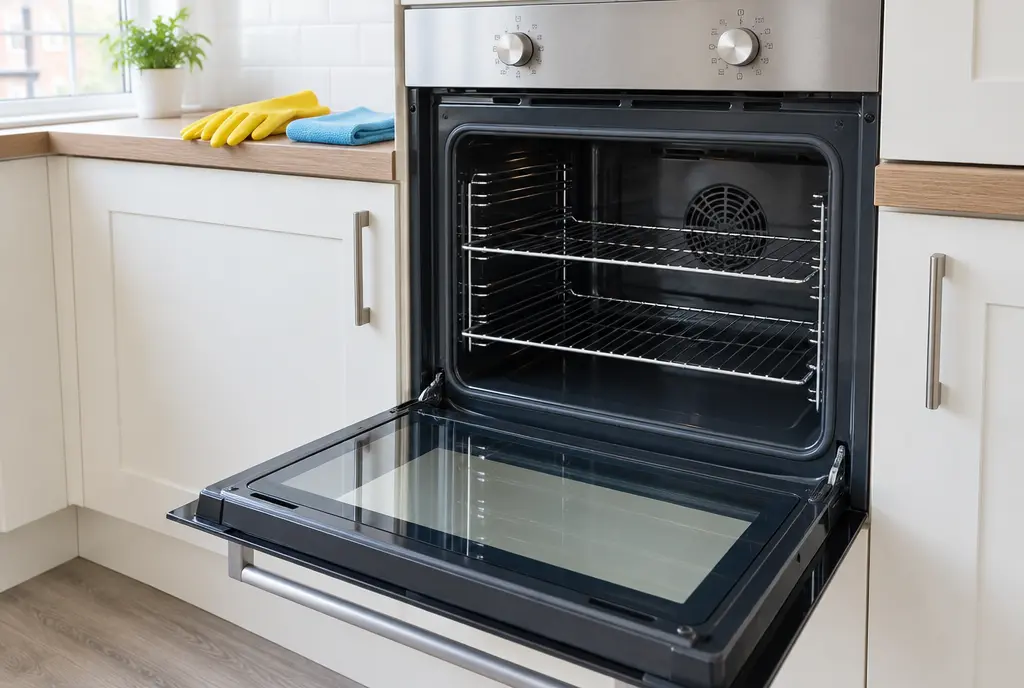
If there’s one appliance that decides whether you get your full deposit back, it’s the oven. It’s the first door an inventory clerk opens.
It’s also the job everyone leaves until last. Don’t. A properly dirty oven needs an overnight soak, so start it the day before your main clean.
What you’ll need
Rubber gloves, a scraper (a plastic one for glass), a bin bag or a large washing-up bowl for the racks, bicarbonate of soda, white vinegar, plenty of cloths and some patience. If you’re using a shop-bought oven cleaner, add eye protection and open a window. Those products are strong.
Step 1: Racks and trays
Take out the racks, trays and grill pan. Put them in a bin bag or a bath with hot water and a good squeeze of washing-up liquid, or your chosen oven cleaner, and leave them overnight. Next day, most of the grime comes off with a scourer.
Lay an old towel in the bath first if you use it. Racks scratch enamel.
Step 2: The inside
For a gentler method, mix bicarbonate of soda with a little water into a thick paste. Spread it over the inside of the oven, avoiding the heating element and any fan. Leave it overnight.
In the morning, scrape and wipe it off with a damp cloth. Spray a little vinegar on anything stubborn. It fizzes against the bicarb and helps lift the last bits. Wipe until there’s no white residue left.
A word of warning. Some ovens have catalytic liners, which are rough panels designed to absorb grease. Check the manual before putting anything harsh on them, because caustic cleaners can damage them.
Step 3: The glass door
Brown streaks on the inside of the glass are what inspectors notice. The bicarb paste works here too, followed by a plastic scraper.
On many ovens, the inner glass panel lifts out, and grease gets trapped between the panes. It’s worth checking the manual. If yours comes apart, clean between the panes, and take a photo before you remove anything so you remember how it goes back.
Step 4: Hob, extractor and the bits around it
Don’t stop at the oven. Clean the hob, the knobs, the splashback and the extractor hood. The metal grease filter in the hood can usually go in the dishwasher or soak in hot soapy water. Then do the outside of the oven, the handle and the storage drawer underneath.
Step 5: Photograph it
Once it’s done, take a photo of the inside with the door open and the racks in. Dated evidence of a clean oven is worth having if anything is disputed later.
When to hand it over
If the oven has had a year or more of regular use and nobody’s touched it, you’re looking at hours, not minutes. The same goes for baked-on grease that hasn’t moved after one soak.
At that point, a professional clean is usually the better use of your moving week. When you ask us for an end of tenancy quote, tell us the state of the oven so the price covers it properly. Get a quote or call 020 7205 7386.
Need help with the clean?
Tell us about the space, timing and priorities. We will recommend the right service.
Get a quote ↗